
Bathroom tile installation in Burlington, NC
Tile makes a bathroom feel finished, but it only lasts if the surface behind it is right. We start with the layers you will never see.
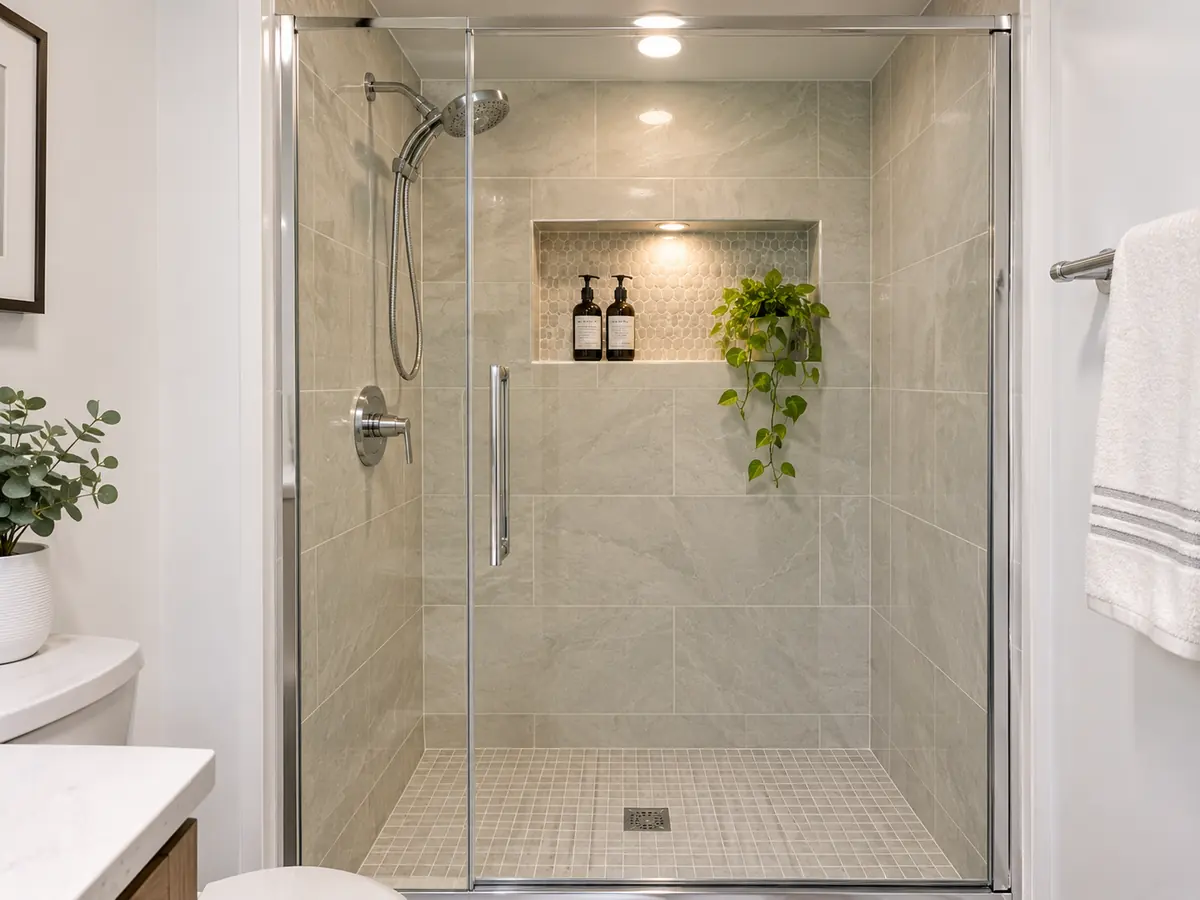
Tile choices for wet rooms
There are thousands of tiles on the market, but a few details narrow the choice for a bathroom. The tile needs to resist water, so porcelain or glazed ceramic are common. Floors need slip resistance, which means texture or small formats. Showers need a plan for grout lines, since they are the weak points. Natural stone such as marble is beautiful but needs sealing and gentle cleaners.
Size and pattern change the feel. Large-format tile has fewer joints and gives a clean, modern look. Small mosaic tile follows curves and gives a lot of grip, which is why it is popular on shower floors. Subway tile is classic. Patterned cement-look tile gives personality to a small floor.
Where tile goes in a bathroom
- Shower walls and floors: the hardest-working surfaces, which need waterproofing behind them.
- Tub surrounds: tile above the tub with a good seal at the tub line.
- Bathroom floors: slip-resistant tile, sometimes with a heating mat underneath.
- Backsplash behind the vanity: a protective strip at the wall.
- Accent walls: a feature wall behind the vanity or the toilet.
- Niches and benches: built into the shower for storage and seating.
Layers behind the tile
A tile job is only as good as what is under it. On a wall, that is a stable substrate such as cement board or a foam panel, plus waterproofing in wet areas. On a floor, it is a flat, stiff subfloor with a membrane that allows slight movement without cracking the tile. In showers, the pan, the drain and the curb need their own carefully sealed layers.
We plan these layers before we choose the tile, because they affect the finished thickness. A tile that sits too proud of the wall around a niche, or a floor that is higher than the hallway, is a design problem we solve at the start. See shower restoration for what happens when this layer fails.
Our process
- Choose tile and confirm quantities, including extra for cuts and future repairs.
- Prepare walls and floor: repair damage, install substrate and waterproof wet areas.
- Dry-lay and plan the pattern so cuts fall in the least visible places.
- Set tile in thin-set mortar with the correct trowel size and consistent spacing.
- Allow the mortar to cure.
- Grout the joints, clean the haze and apply sealer where needed.
- Caulk corners and changes of plane, install fixtures and finish trim.
Layout details that make the difference
Good tile work looks like it was meant to be there. Lines run level and plumb. Cuts at corners are even on both sides. Niches are centered and aligned with the grout lines. Patterns line up where walls meet. Trim pieces finish edges cleanly. These things take planning, and they are the reason a tile job by an experienced installer is worth the cost.
Tile in the rest of the house
For tile in kitchens, entries and other rooms, see tile flooring installation. If you are rebuilding a shower, see shower restoration and walk-in shower conversion.
Care of grout and tile
Use a pH-neutral cleaner and a soft brush. Rinse and dry after cleaning. Reseal cementitious grout and natural stone as the sealer maker recommends. Check caulk at corners and where tile meets the tub or vanity once a year, and replace it if it cracks or darkens. A small amount of upkeep keeps the tile looking fresh and the waterproofing intact.
Ordering extra tile
Order about ten percent extra for cuts, and keep a few spare tiles for future repairs. Dye lots vary.
Questions we hear on the phone
Short answers to what callers ask most. Call if yours is not here.
Can I tile over existing tile?
Sometimes on floors, rarely in showers. We check the condition and the thickness.
How long before I can shower?
After grout and sealer cure, usually a day or more. We give you exact timing.
What size tile is best for a small bathroom?
Both large and small work. Large tile can make a room look bigger, and small tile adds grip on the floor.
Do you supply the tile?
We can help you choose and order, or you can supply your own.
Related services
Tell us about your project.
Call and we will schedule your estimate.