
Hardwood flooring installation in Burlington, NC
A good hardwood floor looks simple. The skill is in the preparation: a flat subfloor, correct moisture and careful layout.
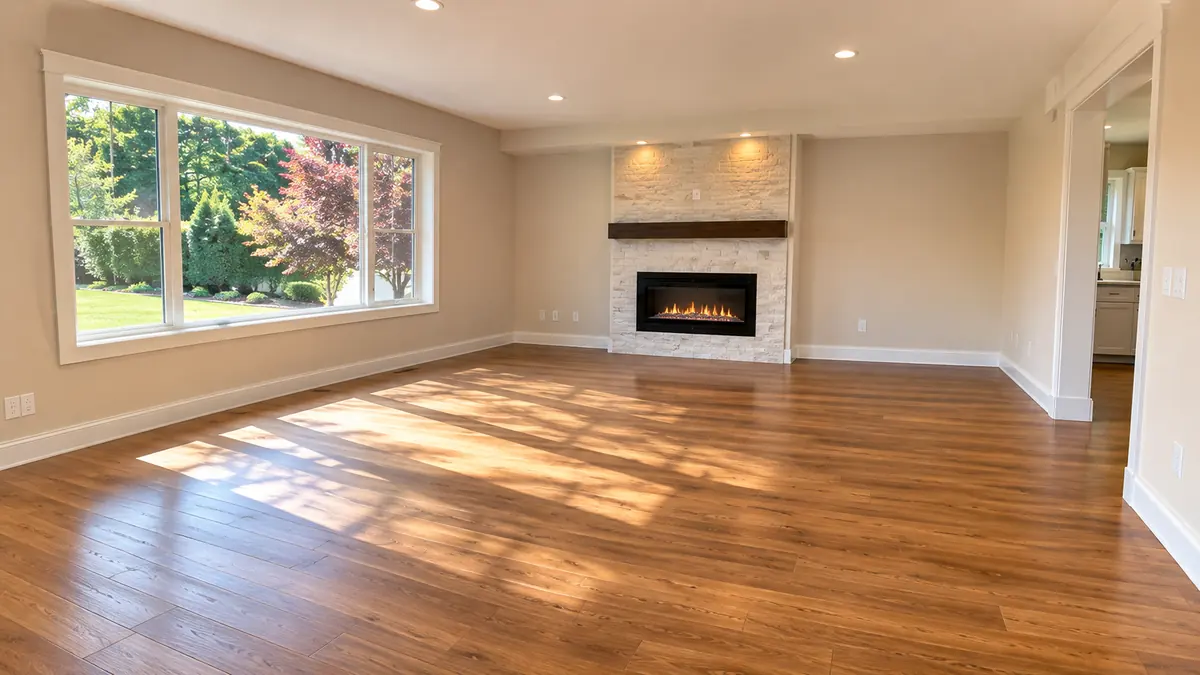
What installation involves
Laying a hardwood floor is a craft. The boards must go down straight, the seams must be tight and the floor must stay level across a room that may not be square. That begins with the subfloor. If it is uneven, squeaky or damp, the new floor will inherit those problems. We check it before we quote, and we explain what needs to be corrected.
This page is about the installation itself. If you are still choosing between species, widths or finishes, see our overview on hardwood flooring. If your floors are already hardwood and simply look worn, refinishing may be the better answer, and you can read about that on our hardwood floor refinishing page.
Installation methods
- Nail-down: boards are nailed through the tongue into a wood subfloor, the classic method for solid hardwood.
- Glue-down: boards are bonded to the subfloor with adhesive, often used for engineered wood on slabs.
- Floating: boards are joined to each other and rest on an underlayment, without being fastened to the subfloor.
- Staple-down: similar to nail-down, using staples for certain engineered products.
Our steps
- Remove old flooring and inspect the subfloor for damage and flatness.
- Repair squeaks, replace rotted sections and level high and low spots.
- Test moisture in the subfloor and the wood, and let the boards acclimate to the room if the manufacturer requires it.
- Install a moisture barrier or underlayment where appropriate.
- Plan the layout so the last row is not a thin sliver, and so the pattern runs well from the main entry.
- Install the boards with proper expansion gaps at walls.
- Add transitions, baseboards and shoe molding, then clean the floor.
- Sand and finish site-finished floors in several coats with curing time between.
Repairing existing hardwood
Not every project is a full replacement. Sometimes a few boards are damaged by a plumbing leak, a pet accident or a spot where an appliance dripped for years. Replacing individual boards is possible, though blending the new with the old takes care. We cut out the damaged section, weave in new boards and sand or stain to match. Older floors may require a light refinishing of the whole room to hide the transition.
Common problems we see
Gaps between boards are common in winter. They tend to close in summer and are normal up to a point. Cupping, where edges rise, signals moisture below. Crowning, where centers rise, can follow cupping after drying. Squeaks come from loose subfloor or nails that no longer grip. Each has a cause, and we find it before choosing a fix.
Timing and furniture
Installing a floor in one room takes a few days, including prep and finishing. Whole-house jobs take longer. We suggest moving the most fragile furniture out before we arrive. If you need us to handle furniture, tell us when you call. Finishes need time to cure, so you will walk in socks for a while and wait to put rugs back.
Acclimation and humidity
Wood floors should be brought to the humidity of the room before installation. Boards are stored in the house for a period, often several days, so they adjust. Installing wood that is too wet leaves gaps when it dries. Installing wood that is too dry can cause buckling when humidity rises. During and after installation, we recommend keeping the house at normal living temperature and humidity.
Seasonal movement is a normal part of owning hardwood. Small gaps may appear in winter and close in summer. A humidifier in dry months and a dehumidifier in humid months can limit the swing.
Pre-finished versus site-finished
Pre-finished boards arrive with the finish already applied, so installation is faster and there is no sanding dust. Site-finished floors are installed raw, then sanded and coated, which gives a flat surface with no beveled edges and lets you choose any stain. Each has advantages, and we help you choose.
Questions we hear on the phone
Short answers to what callers ask most. Call if yours is not here.
How long until I can walk on a new floor?
Prefinished floors are ready right away. Site-finished floors need curing time, and we explain the schedule.
Do I need to leave the house during finishing?
Water-based finishes have less odor, but you may want to stay elsewhere during coats, especially with sensitivities.
Can you match my existing floor?
Often yes, though old floors can be hard to match exactly. We use samples.
Will new hardwood fix squeaks?
Fixing squeaks is part of the prep. We secure loose subfloor before installing.
Related services
Tell us about your project.
Call and we will schedule your estimate.