
Tub-to-shower conversion in Burlington, NC
Climbing over a tub wall gets harder every year. Converting it to a shower gives you a safer, simpler way to get clean, in the same space.
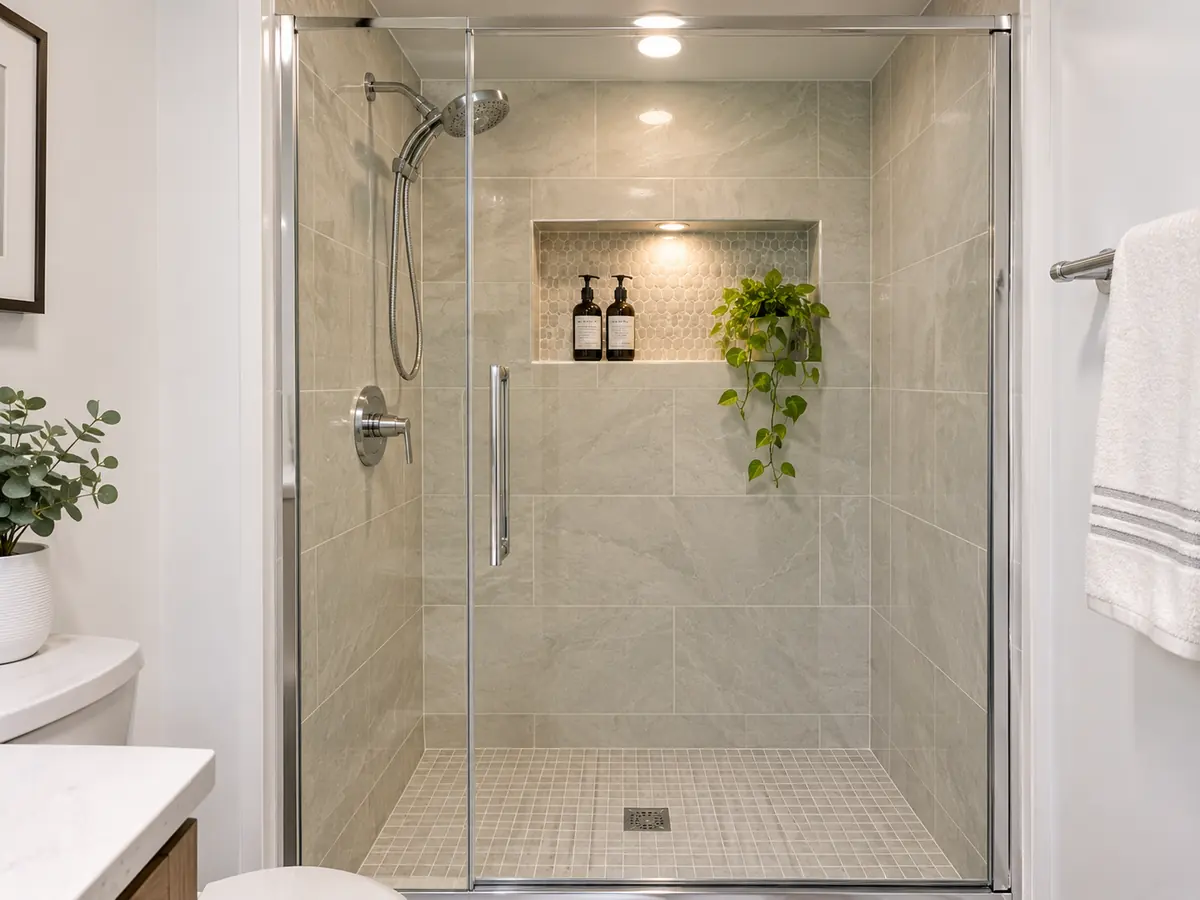
Why people convert tubs to showers
Many of us remember when a bathtub was the center of the bathroom. Today, most people shower and rarely bathe. A tub that is never used still takes up five feet of wall, and stepping over its edge can be a real hazard for anyone with balance or knee problems. Converting to a shower frees up space, improves safety and makes the room easier to clean.
A conversion is also a chance to update the look of the bathroom. A new shower with fresh tile, a better valve and good lighting changes how the whole room feels, often without moving a wall.
Options for the new shower
- Low-threshold shower with a small curb: the easiest to build in the same footprint as the tub.
- Curbless shower: a flush entry that is best for accessibility, but it requires changes to the floor slope and drain. See walk-in shower conversion.
- Prefabricated base and wall panels: faster and economical, and available in many sizes.
- Custom tile shower: more design freedom and higher cost, with waterproofing built in layers.
- Shower with a built-in bench: for seating and shaving, and for those who need to sit while bathing.
Steps in a conversion
- Measure the alcove and decide on the shower size, entry style and materials.
- Remove the tub, surround, floor tile and any damaged wall material.
- Check the subfloor and framing for damage. Tubs are often installed over leaks that have been hidden for years.
- Adjust the drain location and rough in the new valve and showerhead plumbing.
- Install the shower pan or base and test it for leaks.
- Build walls with a waterproof system and set tile or install wall panels.
- Grout, seal, then install the door or curtain rod, fixtures and accessories.
- Repair the surrounding floor, paint and trim.
Drain and plumbing considerations
A tub drain sits at one end of the alcove. A shower drain usually belongs near the center or at the back. Moving it can mean cutting into the floor and adjusting the drain line below. On houses with crawl spaces, that work is usually straightforward. On slab houses, it may involve cutting the concrete. We look at the access during the estimate and tell you what to expect.
The shower valve is another decision. A new pressure-balancing or thermostatic valve helps prevent sudden temperature changes. If your current valve is old, replacing it during the conversion is a smart move.
Do you lose resale value?
Some buyers like to see at least one tub in the house, especially for children. If this is your only bathroom, it is worth thinking about that. In a house with several bathrooms, removing one tub rarely matters. We do not give predictions about the market, but we can talk through the trade-offs for your situation.
Small details that make a big difference
Lighting is often forgotten. A waterproof light above the shower improves visibility and safety. A niche at standing height keeps bottles off the floor. A hand-held showerhead on a bar makes cleaning and rinsing easier. A fan sized for the room reduces steam. These items are small, but they are the things people notice every day.
If the tub alcove has an outside wall, consider adding insulation while the walls are open. It will make the shower warmer in winter.
Questions we hear on the phone
Short answers to what callers ask most. Call if yours is not here.
How long does a tub-to-shower conversion take?
Usually several days to a couple of weeks, depending on the materials and what we find behind the tub.
Can I keep my existing tile?
Some floor tile can stay. Wall surfaces around the old tub are usually replaced.
Is a prefabricated shower good enough?
A quality prefabricated unit can be a good choice. Tile gives more design flexibility.
Will it fit in the space of my tub?
Most standard tub alcoves can hold a good-sized shower.
Related services
Tell us about your project.
Call and we will schedule your estimate.