
What a bathroom remodel really costs in Burlington, NC
Bathrooms are small rooms with a lot of work packed into them. Understanding where the money goes helps you decide where to spend and where to hold back.
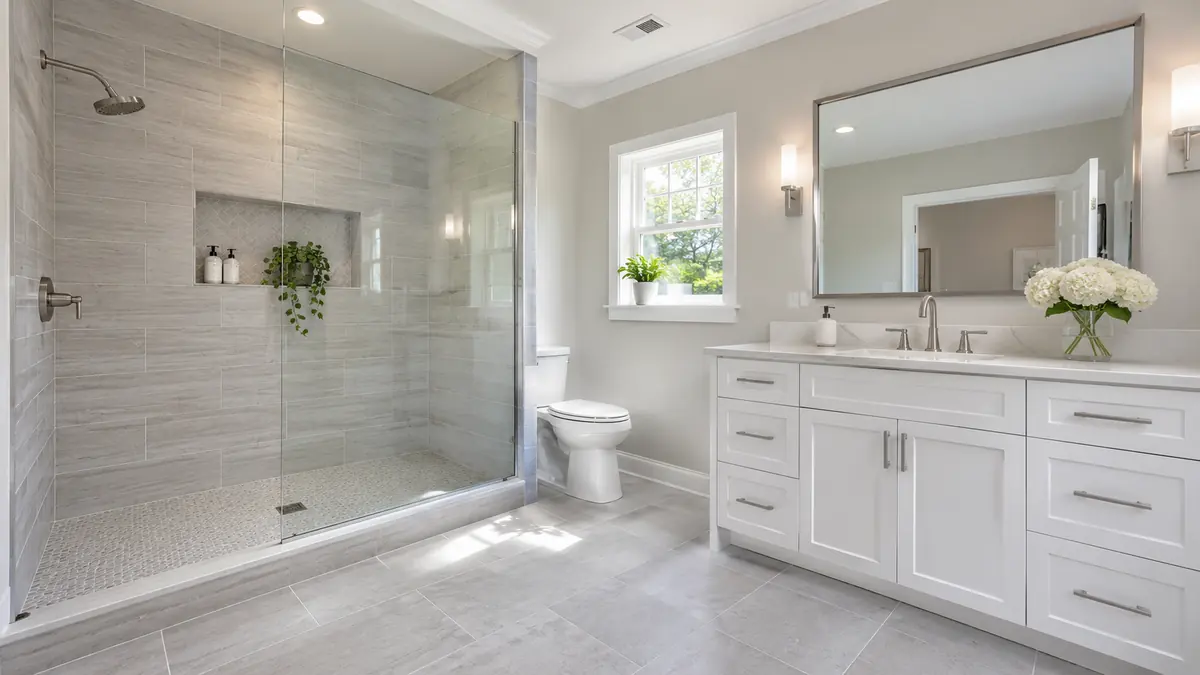
Small room, big workload
A bathroom is typically the smallest room in the house and one of the most expensive per square foot to remodel. The reason is that it packs plumbing, electrical, waterproofing, tile, cabinetry, glass, fixtures and ventilation into a few dozen square feet. Each trade has to work in sequence in a tight space, and many steps need drying or curing time before the next can start.
That is why comparing bathroom estimates takes care. Two quotes for the same room can differ because one includes a waterproof membrane in the shower and the other does not, or because one includes the vanity and fixtures and the other expects you to supply them. We will not give you a made-up average here. We can tell you what shifts the price.
What moves the price most
- Scope: refresh, shower-only rebuild or full gut.
- Shower type: prefabricated unit, tiled shower with a curb or curbless walk-in.
- Tile: size, material, pattern and how much of the room is tiled.
- Plumbing changes: moving a toilet or drain costs far more than replacing fixtures in place.
- Vanity and top: stock, semi-custom or custom, with laminate, quartz or stone.
- Glass: framed, semi-frameless or fully frameless.
- Hidden conditions: rotted subfloor, old leaks and outdated wiring.
- Accessibility features: wider doors, blocking for grab bars and a roll-in shower.
The waterproofing you do not see
The most important part of a bathroom remodel is the part you will never look at again. Waterproofing behind the tile keeps moisture out of your walls and floor. It costs money and takes time, and it is the part some low quotes skip. A shower that leaks behind the tile can ruin a subfloor and a ceiling below before you notice anything. Repairing that costs much more than doing it right the first time.
When you compare estimates, ask each contractor to explain how they waterproof the shower and how they test it. A flood test of the shower floor before tile goes in is a good sign. For more on this, read our page about shower restoration.
Three common levels of bathroom work
A refresh keeps the layout and the major fixtures, and updates surfaces: paint, lighting, mirror, vanity top, faucet and sometimes flooring. It is the lowest-cost option and changes the feel more than you might expect.
A shower or tub rebuild replaces the wet area but leaves the rest of the room largely as it is. This is common with tub-to-shower conversions and walk-in showers. It is often the most valuable part of a bathroom to update, since the shower is where wear and leaks concentrate.
A full renovation removes everything back to the studs and subfloor, repairs what is found and rebuilds. It gives the best result and the highest cost. It also gives the chance to fix layout problems and add features such as better lighting, storage and ventilation.
Plan for what is behind the walls
In older houses, opening a wall or floor often reveals something. It may be a soft subfloor around the toilet, rusted drain lines or wiring that needs replacing. A good estimate includes an allowance for those, and a good contractor shows you what they find. You do not want to discover on day three that nobody planned for a rotted floor.
If you are not sure what to expect, ask for a visit that includes looking at the room below, a crawl space or the ceiling below the bathroom. Stains or sagging there tell a story about what is above.
A budget plan you can use
- Decide whether the layout stays the same. Keeping toilet and shower drains in place saves a lot.
- Choose the shower type and glass.
- Choose tile, with attention to how much surface area you are covering.
- Choose vanity, top, faucet and fixtures.
- Decide whether you need accessibility features now or later. Blocking in the walls costs little today.
- Ask for a written estimate with waterproofing and hidden-condition allowances spelled out.
- Keep a reserve for changes.
Where to spend and where to save
Spend on waterproofing, a good fan, quality shower valve and solid installation. Save by choosing mid-range tile, a stock vanity and keeping plumbing in place. Splurge on one visible feature, such as a beautiful tile accent or a larger shower, rather than trying to upgrade everything. You will notice the shower each day and the faucet each day, but you will rarely notice the third drawer of the vanity.
Cheap fixtures sometimes cost more over time if they leak or fail. A mid-priced faucet from a reputable maker with available parts is a sensible compromise.
Next step
Call (336) 654-1130 to schedule a visit. We will look at the bathroom, talk through what you want and give you a written estimate. See bathroom remodeling for the full picture and shower restoration if a smaller repair might be enough.
Questions to ask about any bathroom proposal
- Does the scope list demolition, waterproofing, tile, plumbing fixtures and electrical separately?
- Who orders materials, and who handles delays?
- What happens if hidden damage is found?
- How are permits and inspections handled?
- What is the plan for dust and for using the home during the work?
Questions we hear on the phone
Short answers to what callers ask most. Call if yours is not here.
Is it cheaper to keep my existing tub?
Often yes, especially if resurfacing is possible. But a shower may suit your needs better.
Can I phase a bathroom remodel?
Sometimes, but one room has a lot of interdependent work. We discuss what makes sense.
How long is the bathroom out of service?
That depends on scope. We give a calendar at the estimate.
Do I need a permit?
Plumbing or electrical changes commonly do. We tell you what to expect.
Related services
Tell us about your project.
Call and we will schedule your estimate.