
Shower regrout vs full remodel: how to decide
Not every tired shower needs to be torn out. Not every shower can be saved with new grout, either. The key is knowing what is going on behind the tile.
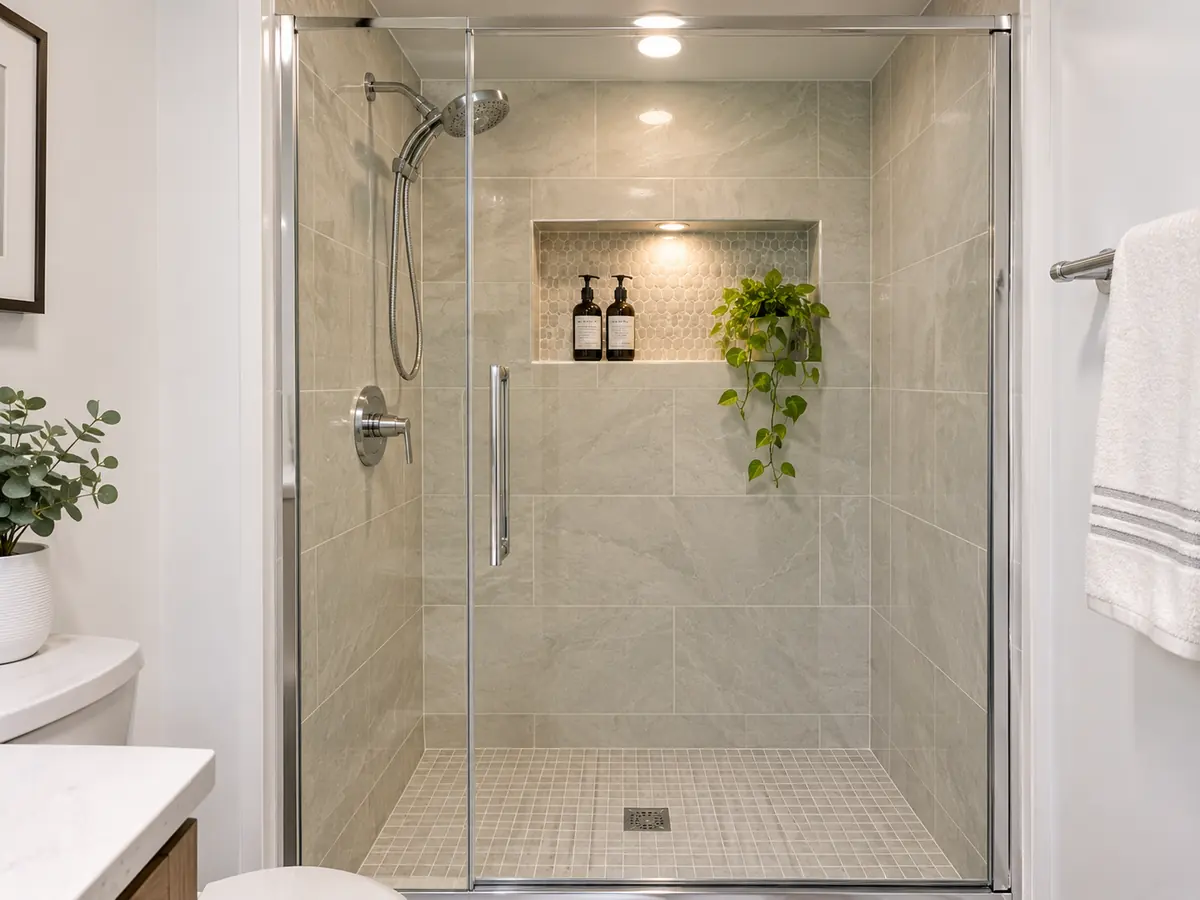
What grout does and does not do
Grout fills the gaps between tiles and gives the surface its finished look. Cement-based grout is porous, which means it can stain, crack and absorb water over time. But grout is not the waterproofing layer of a shower. The waterproofing is behind the tile, in a membrane or waterproof backer. If that layer is intact, worn grout is mostly a cosmetic and maintenance issue. If that layer has failed, new grout will not stop leaks.
That is the core of this decision: is the problem on the surface, or behind it?
Signs that regrouting may be enough
- Grout is stained, discolored or dirty but firmly in place.
- A few hairline cracks, with no loose tile.
- Caulk at corners and the tub has pulled away, but walls feel solid.
- No soft spots, bulges or musty smell.
- No water stains on the ceiling or walls below or beside the shower.
Signs that the problem is deeper
- Tiles are loose or hollow-sounding when tapped.
- Grout crumbles or washes out repeatedly.
- The wall feels soft or spongy.
- Mold or mildew keeps returning, even after cleaning.
- Stains or damp spots appear on the other side of the wall or on the ceiling below.
- Water pools or the floor does not drain well.
- The shower pan seems to leak.
How a regrout is done
- Remove old grout to a consistent depth.
- Clean the joints and the tile faces.
- Replace damaged caulk at corners and changes of plane with flexible sealant.
- Apply new grout and clean off the haze.
- Cure properly, then seal if the grout calls for it.
Repair in between
Sometimes the answer is a targeted repair. A few loose tiles can be removed and reset. A small leak at a valve or a cracked corner may be fixed without a full tear-out. But repairs work only when the problem is local and caught early. If you find widespread moisture damage, a spot repair just postpones the real fix. See shower restoration.
When a full remodel makes sense
A full remodel is the right choice when the waterproofing has failed, when walls or floor are damaged or when you are also unhappy with the layout or style. In that case, the tile and backer are removed, damage is repaired, a new waterproof system is installed and the shower is rebuilt. It costs more than regrouting, but it solves the cause and restarts the life of the shower.
It is also a good time to change things you do not like. You could enlarge the shower, add a bench or niche, switch to a walk-in design or upgrade the valve and head. See bathroom remodeling and walk-in shower conversion.
A cost-sense framework
Compare the cost of repeated small fixes with the cost of one proper rebuild. A regrout that must be done every year or two, plus water damage that slowly spreads, can add up to more than a rebuild. On the other hand, a solid shower with dingy grout does not need a remodel. Be honest about the condition behind the tile before you decide.
Whichever way it goes, fix leaks promptly. Water travels, and damage to subfloors and ceilings is much more expensive than a shower repair.
Let us take a look
Call (336) 654-1130 and we will inspect the shower, test for soft spots and give you a straight answer on whether a repair or a rebuild fits. Also see bathroom tile installation if you are considering a retile.
A few simple tests you can do yourself
- Press gently on the wall tile. Does it feel solid or does it flex?
- Tap tiles with a coin. A hollow sound can mean loose tile.
- Look at the ceiling and walls near the shower for stains.
- Smell the area. A musty smell points to trapped moisture.
- Check the caulk lines for gaps or black growth.
- Watch how fast water drains. Slow drainage can mean a pan problem.
What happens if you ignore it
Small leaks become big problems slowly. Water seeping behind tile can rot framing, soak insulation, grow mold and stain ceilings below. By the time damage is visible, the repair is larger and more costly. A prompt inspection is inexpensive compared with the cost of repairing structural damage. If you are unsure, have it looked at sooner rather than later.
Also remember that grout is not waterproof on its own. Sealing and good caulking help, but the real protection is what sits behind the tile.
Keeping a good shower good
- Squeegee or wipe walls after use when possible.
- Run the bath fan during and after showers.
- Reseal grout as recommended.
- Replace failing caulk promptly.
- Clean with gentle cleaners that do not eat grout.
- Fix loose tile at the first sign.
Why a good installer matters
Many shower failures come from shortcuts during construction, such as missing waterproofing, wrong slope or poor tile bonding. A shower built correctly can last for decades. If your shower is failing early, ask whether the original installation was done properly. A rebuild done right avoids repeating the same problem.
Choosing grout and caulk wisely
Not all grout is the same. Standard cement grout is affordable and widely used, but it needs sealing and can stain. Epoxy and urethane grouts resist stains and moisture better, but they are harder to work with and cost more. Choose based on how the shower is used and how much maintenance you want.
Corners and the joint where walls meet the floor or tub should use flexible caulk, not rigid grout, because these joints move. Using the wrong product here is a common cause of cracks and leaks. Match the caulk color to the grout so it looks neat. Replace caulk when it separates or discolors.
When to call a professional
If you see moisture damage, soft walls or signs of a leak, do not wait. A short inspection can tell you whether you are dealing with a surface issue or a hidden one, and prevents costly damage. Call (336) 654-1130 and we will take a look at the shower.
Questions we hear on the phone
Short answers to what callers ask most. Call if yours is not here.
Can new grout stop a shower leak?
Only if the leak is truly at the grout. Most leaks come from the waterproofing behind the tile.
How often should grout be sealed?
It depends on the grout. Follow the manufacturer's guidance.
Why does my grout keep cracking?
Movement, poor prep or moisture behind the tile can all be causes.
Can loose tiles be reset?
Yes, if the wall behind them is sound.
Related services
Tell us about your project.
Call and we will schedule your estimate.