
LVP vs hardwood vs tile for a basement floor
Basement floors face moisture, cold and sometimes real water. The right choice protects your investment and feels good underfoot.
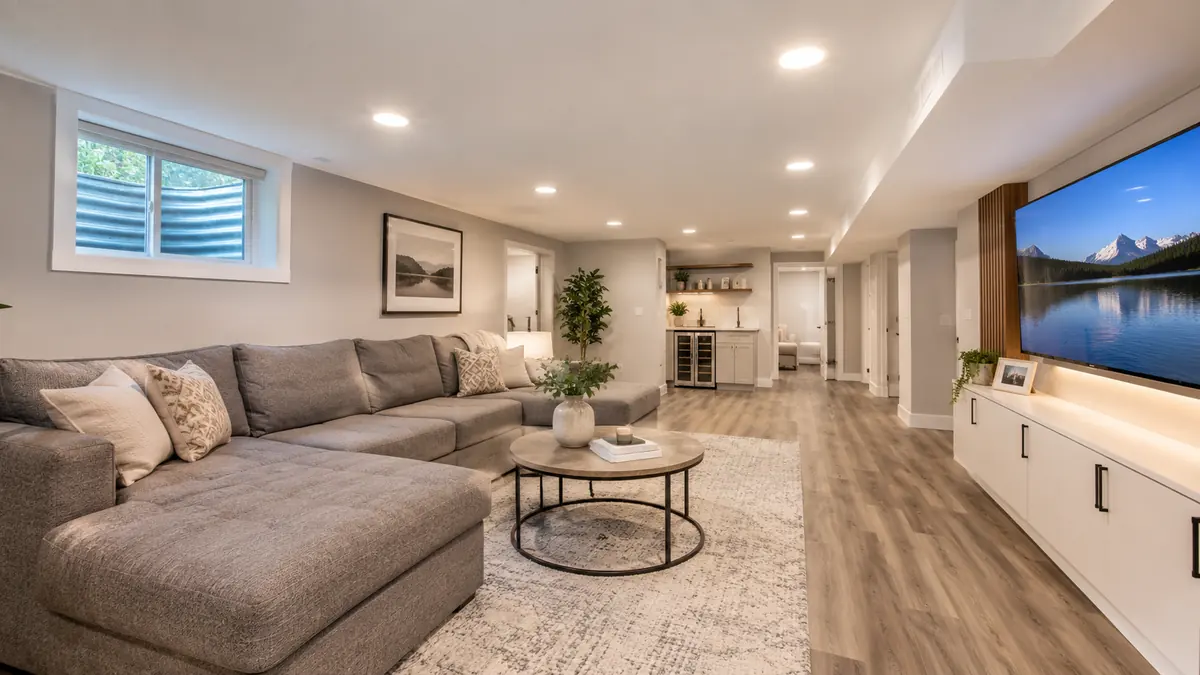
Why basement floors are different
A basement slab sits against the ground. Moisture moves through concrete as vapor even when no water is visible, and heavy rain can push real water through cracks or along the wall joint. A floor that works well upstairs, such as solid hardwood, can cup, buckle or grow mold below grade. That is why the choice here matters more than anywhere else in the house.
Before comparing materials, test the slab. Tape a square of plastic to the concrete for a couple of days and see whether moisture collects under it, or use a proper moisture meter. If the slab is wet, fix the cause first. See our guide to finishing a basement in North Carolina.
Luxury vinyl plank
Luxury vinyl plank, often called LVP, is the most common basement floor for good reason. It is waterproof, so spills and minor moisture do not harm it. It is warmer and softer than tile, installs quickly and comes in realistic wood looks. Many products float over the slab with a built-in pad, which also adds a little sound and comfort.
The tradeoffs: it can show dents from heavy furniture, quality varies a lot between products and a very uneven slab needs leveling first. Cheap products can look thin. Read our page on LVP flooring installation.
Tile
Porcelain and ceramic tile are durable and fully waterproof. They handle humidity and the occasional flood with no damage. They are a great choice for a basement bathroom, laundry or bar. Tile feels cold in winter, but electric radiant heat mats can solve that, and a rug helps in living areas.
Tile requires a flat slab and careful installation. Cracks in the concrete can telegraph through, so some floors need an uncoupling membrane. It costs more in labor than LVP, and a hard floor is less forgiving if something drops. See tile flooring installation.
Hardwood
Solid hardwood is not recommended below grade. It reacts to changes in moisture, and a concrete slab is a constant source. Engineered hardwood is more stable, and some products are rated for basements when installed over the right moisture barrier. Even then, it is the riskiest of the three in a basement that ever gets wet.
If you love the look, a wood-look LVP or tile gives you most of the appearance with far less risk. Keep real hardwood for the upper floors, see hardwood flooring.
Quick comparison
- Water resistance: tile best, LVP very good, hardwood poor.
- Warmth underfoot: LVP and hardwood warmer, tile coldest unless heated.
- Installation speed: LVP fastest, tile slowest.
- Subfloor demands: tile needs the flattest slab.
- Repairs: LVP planks can be replaced, tile can be re-grouted or replaced piece by piece.
- Risk in a damp basement: hardwood highest.
What goes under the floor
The layers under a finished floor matter as much as the surface. Options include a vapor barrier, a dimpled subfloor panel that lets the slab breathe, or a plywood layer over sleepers. Each adds height, so check your ceiling clearance first. A good installer will match the underlayment to your slab condition and the flooring product.
Fill cracks, grind high spots and level low spots. A flat slab is the single biggest factor in how a floor looks and lasts.
A simple way to choose
- If the basement is dry and you want warmth and speed, choose LVP.
- If it has a bathroom, laundry or any chance of water, choose tile in those areas.
- If it is a family room with kids and pets, LVP is hard to beat.
- If you want real wood, put it upstairs and use a wood-look product below.
- If you are unsure, test the slab first.
Next step
Call (336) 654-1130 and we will look at your slab, the moisture history and how you use the room. We can then recommend a floor and the preparation it needs. See also basement flooring installation for how we approach it.
Comfort, sound and how the room feels
Floors feel different underfoot, and in a basement that matters because the slab is naturally cooler than upstairs rooms. LVP with an attached pad feels softer and a bit warmer than tile. Tile feels solid and cool, which some people love in summer and dislike in winter. Rugs, radiant mats and furniture placement change the experience a lot.
Sound is the other factor. Hard surfaces carry footsteps and echo, especially in a large open basement with a low ceiling. Pads under LVP and area rugs on top of tile help. If the basement will be a media room or a play space, ask your installer about underlayments that add sound control.
Maintenance over the years
LVP needs sweeping and damp mopping with the cleaner the maker recommends. Tile needs the same, plus occasional attention to the grout lines, which can be sealed or chosen in an epoxy that resists stains. Neither needs refinishing. A damaged LVP plank can usually be swapped, and a cracked tile can be cut out and replaced if you kept a few spares.
Keep extra boxes of whatever you choose. Dye lots and product lines change, and finding a match years later can be hard. Store them flat and dry, and not in the basement itself if it is ever damp.
Special situations
- Basement bathroom: tile on the floor and shower walls, LVP in the rest of the room.
- Laundry area: tile or sheet vinyl, with a floor drain if possible.
- Home gym: rubber flooring or dense LVP over a firm pad.
- Workshop: sealed or epoxy-coated concrete may be the best surface.
- Playroom: LVP or carpet tiles that can be lifted and cleaned.
Transitions and stairs
Think about where the new floor meets other surfaces. At the bottom of the stairs, at a doorway to a utility room and at a bathroom threshold, you will need clean transitions. Floating floors need room to expand at the edges, which is covered by trim. Plan stair nosing and any height differences early so the finished room looks intentional rather than patched.
Questions we hear on the phone
Short answers to what callers ask most. Call if yours is not here.
What is the best floor for a basement?
LVP is the most common choice. Tile is best in wet areas.
Can I put hardwood in a basement?
Solid hardwood is not recommended. Engineered products need careful moisture control.
Is carpet okay in a basement?
It is risky if the space can get damp, but carpet tiles can work in dry spaces.
Do I need to level the slab?
Usually yes. Most floors need a flat surface.
Related services
Tell us about your project.
Call and we will schedule your estimate.