
What a tub-to-shower conversion costs and why prices differ
Converting a tub to a shower is one of the most popular bathroom projects. It can be a modest job or a major one, depending on a few choices you make early.
Why this project varies so much
On paper a tub-to-shower conversion sounds simple. Take out the tub, put in a shower. In practice, the job can range from a quick swap using a prefabricated unit to a custom tile shower with a curbless entry and a built-in bench. The difference in time, materials and labor is large. So is the difference in price.
We do not post a single figure, since it would not describe your bathroom. This guide walks through the choices that move the number, in the order you will likely face them.
Choice one: prefabricated or tile
A prefabricated shower unit, in one or several pieces, is built to fit a tub alcove. It goes in faster, has fewer seams and costs less than a custom tile shower. It comes in a range of styles, some quite attractive. The main limits are size and design flexibility. You get the shapes the manufacturer makes.
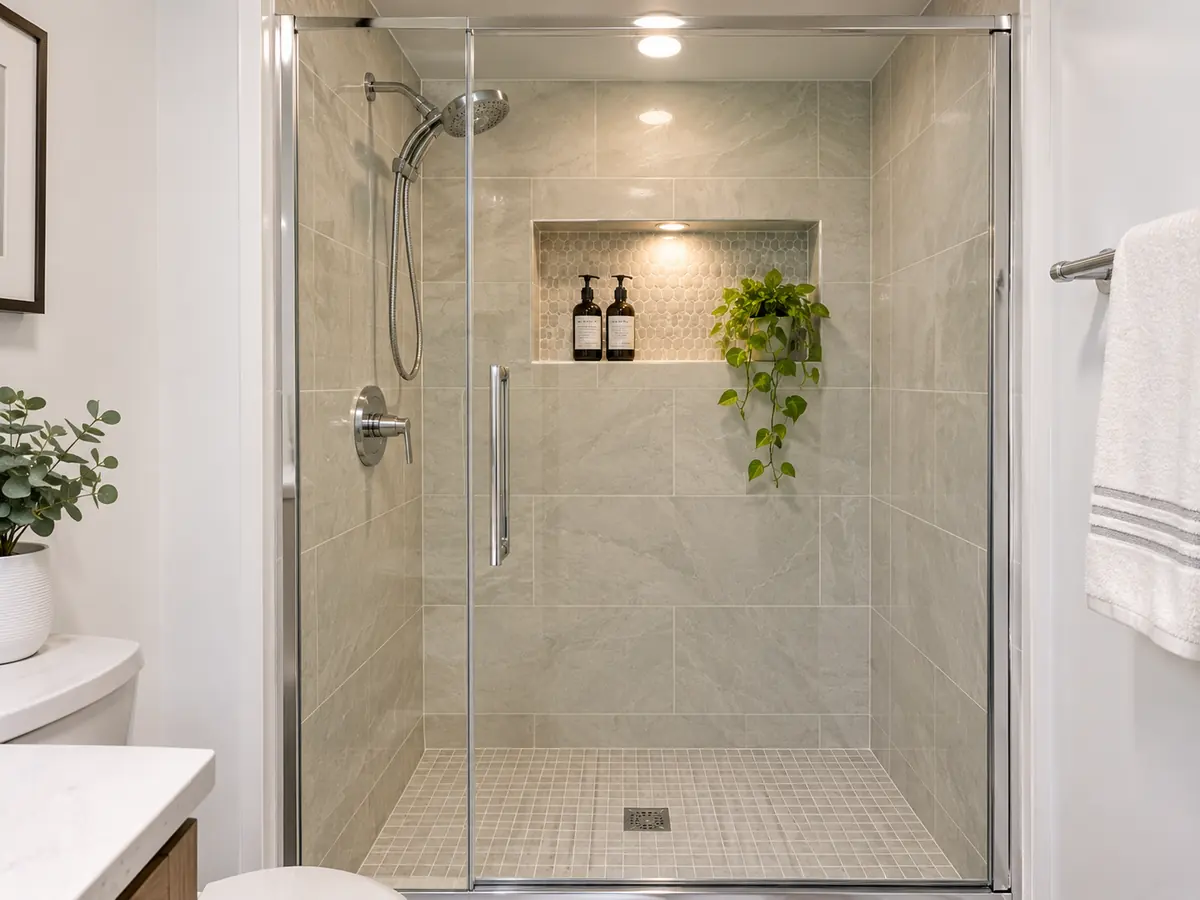
A tile shower is built on site in layers: a sloped base, waterproofing, wall board, then tile and grout. It takes more time and skill, and it can be any size and design. The result is a shower that looks custom and can include niches, benches and special features. It also needs more care to build right, since every layer matters.
Neither is better in every case. If the budget is tight and the shower will be used often, a quality prefabricated unit is a sound choice. If you want a particular look or a larger shower, tile may be worth the cost.
Choice two: the entry
A shower with a standard curb is the most economical. A low-threshold base or a curbless design adds work, since the floor must slope toward the drain and the bathroom floor may need to be modified. Curbless entries are very convenient, especially for people with limited mobility, and they look clean and open. They also cost more, because of the structural and waterproofing steps involved. See our page on walk-in shower conversion.
Choice three: drain and plumbing
A tub drain sits at one end of the alcove. A shower drain is usually near the center. Moving it may mean cutting the floor and adjusting the drain line. In a house with a crawl space, that work can be done from below. On a slab, the concrete may need cutting. Both add cost, though it varies a lot with access.
The shower valve also matters. Replacing an old valve during the conversion is wise, since access is easy, and a modern pressure-balancing valve is safer. Moving the valve location to a better height adds a little work.
Choice four: tile, glass and finishes
- Wall tile size and pattern: larger tiles have fewer grout lines, but intricate patterns take more time.
- Floor tile: small tiles give grip and conform to slopes.
- Niches and benches: useful features that add framing and tile work.
- Glass: a curtain rod is least expensive, framed doors cost more and frameless doors cost more still.
- Fixtures: showerhead, hand shower and valve trim come in many price levels.
What lurks behind the tub
Tubs hide things. A tub that has leaked for years can leave rotted subfloor, stained framing and mold behind it. Old tub surrounds may hide wall damage that was never visible. We cannot see these until the tub comes out. A responsible estimate includes an allowance, and a responsible contractor shows you what they find and discusses options.
If you suspect a hidden leak, look at the ceiling below the bathroom, check for soft spots near the tub and look in a crawl space if you have one. Our page on shower restoration describes the signs.
Alternatives worth knowing
If the tub is simply stained or dull, tub resurfacing might be a better value. If you want the old walls and the tub left alone, shower restoration can refresh grout and caulk. If you want to leave the tub but make it easier to enter, a walk-in tub is an option, but it is a different kind of product with its own cost and limits. We help you decide which is right for you.
Getting a fair estimate
Call (336) 654-1130 to schedule a visit. See also tub-to-shower conversion for the full process.
- Decide on prefabricated or tile, and the type of entry.
- Choose finishes and glass.
- Ask for a written estimate that describes waterproofing, drain work and who handles plumbing.
- Ask what happens if hidden damage is found, and how it is priced.
- Compare estimates line by line.
- Keep a reserve for the unknown.
What changes the price of a conversion
A conversion looks simple, but a lot happens behind the finished wall. The tub comes out, the drain and valve may be moved, the floor is rebuilt to slope toward a new drain, and the walls are waterproofed before any tile or panel goes on. Each of these steps takes skill, and skipping one can lead to leaks later.
The size of the shower, the material of the walls and the type of door also change the total. A prefabricated base and wall panels are quicker. A custom tile shower with a bench and niche takes longer and needs more detail work.
Planning for safety and comfort
If the conversion is partly about safety, plan for it now. Add blocking in the walls for grab bars, choose a low threshold, pick slip-resistant tile and think about a built-in seat. These add little cost when built in, and much more to add later. Read our guide to an aging in place bathroom checklist for ideas.
Prefab or custom tile?
Many conversions use a one-piece or multi-piece acrylic or fiberglass shower insert. It installs quickly and has few seams. A custom tile shower takes more time and gives more design freedom, including benches, niches and different sizes. Neither is better for everyone. Choose based on your budget, taste and how you will use the shower.
Questions we hear on the phone
Short answers to what callers ask most. Call if yours is not here.
Can the conversion be done in a few days?
A prefabricated shower in a sound bathroom can be quick. Tile showers take longer because of curing.
Will the new shower fit in the tub space?
Usually yes. Standard alcoves hold a good-sized shower.
Do I need a permit?
Plumbing changes often do. We tell you what to expect.
What if I want to keep a tub somewhere in the house?
That is worth thinking about before removing your only tub.
Related services
Tell us about your project.
Call and we will schedule your estimate.